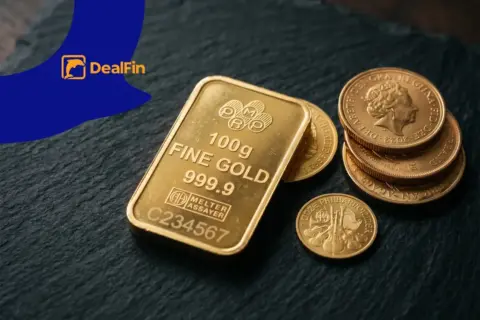
Noble Metals, What Are They and Where Are They Used?
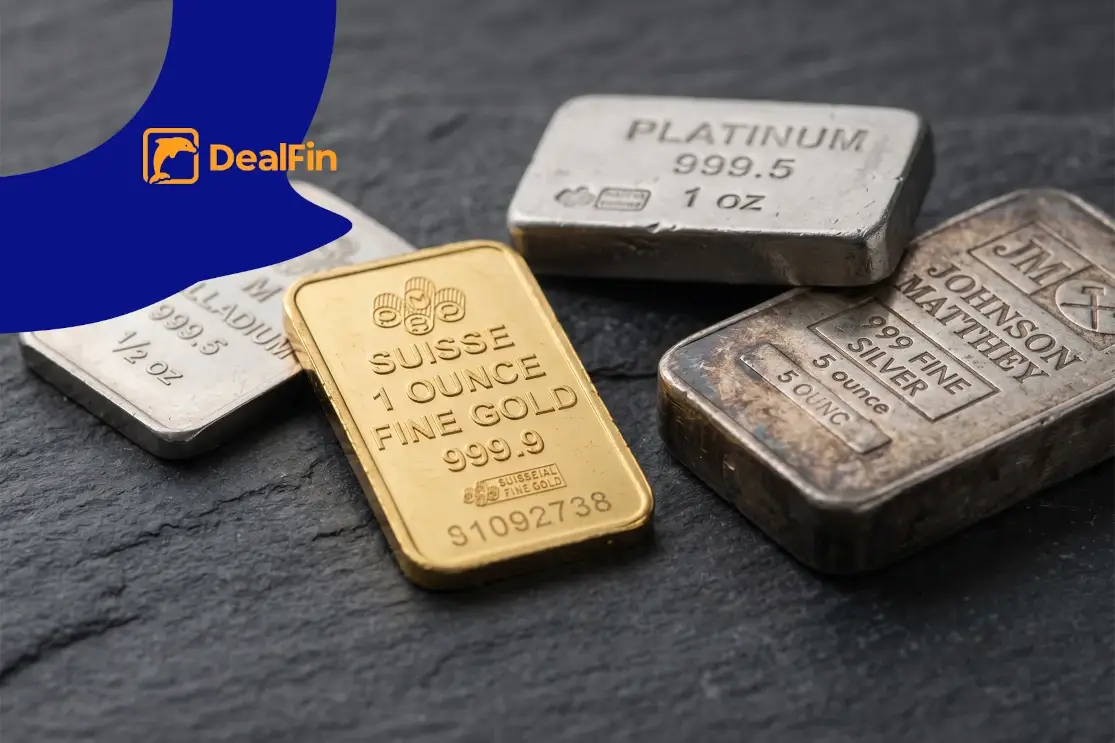
Noble metals are among the most interesting materials in chemistry, industry and the investment world. This term refers to metals that react very little with their environment, resist corrosion and preserve their physical and aesthetic properties over the long term. That is exactly why people have used them for centuries in jewelry, coins, technical components and as stores of value.
The best-known examples are gold, silver, platinum and palladium, but the group is broader. It also includes rhodium, iridium, ruthenium and osmium. In this article, we explain what noble metals are, how they differ from precious metals, where they are used and which of them are among the most valuable.
What Are Noble Metals?
Noble metals are metals with low chemical reactivity. In practice, this means they do not oxidize easily in air, do not rust and usually resist moisture and common chemical influences well. Their “nobility” therefore does not come from price, but mainly from chemical behavior.
Typical noble metals are found mainly among transition metals in the periodic table. They have high density, high melting points, good electrical conductivity and often a strong shine. At the same time, they are relatively rare in nature, which supports their economic value.
Their main properties include:
- resistance to corrosion and oxidation,
- low reactivity,
- rare occurrence,
- aesthetic value,
- and good workability.
Thanks to this, they are used wherever a reliable, stable and long-lasting material is needed.
Difference Between Noble Metals and Precious Metals
The terms noble metals and precious metals are often confused, but they do not mean exactly the same thing. A noble metal is a chemical term: it describes a metal that is resistant to corrosion and common reactions. A precious metal is more of an economic term: it refers to a metal with a high market price, limited availability and demand in industry, jewelry or investment.
Most precious metals are also noble. Gold is a good example because it is chemically stable and at the same time very valuable. Platinum and rhodium work in a similar way. However, not every metal with a high price is commonly classified as a classic investment precious metal, and not every noble metal is practically accessible to a small investor.
List of Noble Metals
| Metal | Symbol | Density (g/cm³) | Color | Main use |
| Gold | Au | 19,3 | yellow | jewelry, investment, electronics |
| Silver | Ag | 10,5 | silvery white | jewelry, industry, investment |
| Platinum | Pt | 21,4 | silvery white | catalysts, jewelry, laboratories |
| Palladium | Pd | 12,0 | silvery white | catalysts, electronics |
| Rhodium | Rh | 12,4 | silvery white | catalysts, surface coatings |
| Iridium | Ir | 22,6 | silvery white | industry, medicine, electrodes |
| Ruthenium | Ru | 12,4 | silvery white | electronics, alloys |
| Osmium | Os | 22,6 | blue-gray | special industrial use |
- Gold is the best-known noble metal and also a kind of symbol of value preservation, the one investors usually think of first when they hear “investment precious metals”. It stands out for its malleability, durability and stable color.
- Silver has exceptional conductivity, which is why it is important in electronics, solar panels and jewelry.
- Platinum is heavy, durable and heat-resistant, making it suitable for catalysts and demanding industrial processes.
- Palladium is used mainly in automotive catalysts and electronics.
- Rhodium is among the most expensive noble metals because it is very rare and important for reducing emissions.
- Iridium is extremely hard and resistant to high temperatures.
- Ruthenium improves the properties of alloys.
- Osmium is among the densest known elements.
Properties of Noble Metals
The most important property is corrosion resistance. While iron rusts in moisture, gold or platinum remain stable even after a long time. Silver may darken on the surface, but this is not classic corrosion like with common metals. A thin layer of sulfur compounds forms, which can be removed by cleaning.
Noble metals also have high density. Gold, as one of the most sought-after precious metals, has a density of approximately 19.3 g/cm³, which is a very important number in the investment world. Osmium and iridium have a density of around 22.6 g/cm³, so even a small volume feels very heavy.
Many of these metals are malleable and ductile, which makes it easier to produce jewelry, foil, contacts and very small components.
High melting points and good electrical conductivity are also significant. Thanks to this, noble metals are used in electronics, the chemical industry, laboratory technology and healthcare.
Where Are Noble Metals Used?
There are several ways noble metals are used. They may be used in jewelry, investment or industry, for example. But there are many more applications.
Jewelry
In jewelry making, gold, silver and platinum dominate. Gold is often used in alloys to gain greater hardness or a different color. White gold is created by adding metals with a silvery shade, while rose gold gets its color from a higher share of copper.
Investment
Investment metals mainly include gold and silver. They are liquid, well known and commonly available in the form of bars, coins or investment products. Platinum and palladium can complement a portfolio, but their prices depend more on industrial demand.
Industry and Electronics
Platinum, palladium and rhodium are used in catalysts that help reduce emissions. Precious metals such as gold and silver are used in contacts, conductors and sensitive electronic components. Silver is also important in photovoltaics, where it helps convert solar energy into electricity.
Medicine and Dentistry
Gold, platinum, palladium and iridium are used in medicine, dentistry and implants. The reason is biological compatibility, strength and resistance to the effects of body fluids.
Chemical Industry
Noble metals serve as catalysts in the production of chemicals, fertilizers, plastics and fuels. They help speed up reactions, reduce the energy intensity of production and improve precision.
Which Noble Metals Are the Most Valuable?
Prices of noble metals change every day, so any ranking should be taken as approximate. In the long term, rhodium and iridium are among the most expensive, because they are rare, mined in small volumes and have limited supply. Gold, platinum and palladium are also very valuable.
| Metal | Approximate price per ounce | Rarity |
| Rhodium | approx. 8 300 USD | extremely rare |
| Iridium | approx. 7 200 USD | very rare |
| Gold | approx. 4 200 USD | rare, but liquid |
| Platinum | approx. 1 700 USD | rare |
| Palladium | approx. 1 300 USD | rare |
| Silver | approx. 65–70 USD | more accessible |
Rhodium reaches high prices mainly because of its small market and important role in automotive catalysts. For the average investor, the most accessible precious metals are gold and silver. They offer the broadest market, simple buying and selling and are also easier for the general public to understand than lesser-known platinum metals.
Noble Metals as an Investment
Investment metals can serve as protection for part of one’s wealth, portfolio diversification or insurance against currency and geopolitical risks.
- Gold is usually the conservative foundation, while silver combines investment and industrial demand.
- Platinum and palladium may offer interesting potential, but their prices react more strongly to the automotive industry, emission standards and technological development.
- Rhodium may attract more speculative traders or true enthusiasts of noble metals and their trading.
An investor can choose physical metals, ETF funds or shares of mining companies. Physical bars and coins provide direct ownership, ETFs are more practical for trading, and mining companies bring higher risk as well as potential return.
A reasonable approach usually does not build the entire portfolio on one metal, but combines multiple assets according to goals, time horizon and risk tolerance.
Frequently Asked Questions, Noble Metals
The main noble metals include gold, silver, platinum, palladium, rhodium, iridium, ruthenium and osmium.
It is often rhodium, but the ranking changes depending on current market price, availability and industrial demand.
A noble metal is chemically resistant. A precious metal, on the other hand, has high market value. Many metals fall into both categories.
They do not tarnish or corrode very slowly because they are low-reactive and do not easily form unstable oxides in air.
Rhodium, iridium and osmium are considered especially rare. However, it depends on whether we assess occurrence in nature, mining volume or tradable supply.
Interested in investing in precious metals? Read our other articles about investment gold, its prices and ways to buy bars and investment coins.