Troy Ounce, How Much Does It Weigh and How Much Does an Ounce of Gold Cost?
When buying investment metals, you will come across one essential term. It is, of course, the troy ounce. Why are precious metals measured in troy ounces and not in regular grams? The answer lies deep in the history of international trade, and to this day it remains a globally recognized weight standard for every market.
This specific unit developed and became established back in the Middle Ages. Interestingly, its name comes from the French city of Troyes, where it was used in trade. For precious metals, it is still used today, with every ounce of gold having a precisely defined weight recognized by all global traders and investors.
In this article, you will learn everything important about the troy ounce. We will look in detail at how much a troy ounce weighs and how the ounce to grams conversion works. We will also explain how much an ounce of gold and silver costs according to current prices for 2026.
What Is a Troy Ounce?
The basic definition is very simple. A troy ounce is the primary unit of weight used specifically for precious metals. Globally, it is used for gold, silver, platinum and palladium. On financial markets and exchanges, it is commonly abbreviated as “oz”.
As an investor, it is absolutely necessary to know one small difference. A troy ounce and a regular ounce, avoirdupois, are not the same thing. A regular ounce is used in Anglo-Saxon countries for food or other common goods and is physically lighter. For all investment metals, the troy ounce always applies, and only the troy ounce.
How Much Does a Troy Ounce Weigh?
The exact weight of this unit is completely fixed internationally. If you want absolute precision, 1 troy ounce of gold is exactly equal to 31.1034768 grams of this precious metal.
In regular trading practice, however, a shorter and clearer conversion is often used. It is simply commonly calculated that a troy ounce is approximately 31.1 g.
By comparison, a regular ounce weighs only about 28.35 grams. Precious metals are therefore always slightly heavier under the same nominal unit. Here is a clear conversion table for quick reference:
| Unit | Value in grams |
|---|---|
| 1 troy ounce | 31,1035 g |
| 1/2 troy ounce | 15,5517 g |
| 1/4 troy ounce | 7,7759 g |
| 1/10 troy ounce | 3,1103 g |
| 1 regular ounce | 28,3495 g |
How Much Does an Ounce of Gold Cost?
For 2026, the markets are operating at completely new price levels compared with previous years. The current gold price on global markets is around the 4,500 dollar mark. Converted into Czech currency, this means that one ounce of gold costs roughly 94,000 Kč.
You may be wondering how much an ounce of gold really costs when buying physical gold. The final price for the customer depends on several additional factors. The spot price on exchanges, the current USD/CZK exchange rate and the dealer’s premium all have a major impact. Tracking these values is absolutely crucial for every investor.
Thanks to this information, you can easily calculate other useful prices as well. The total price per ounce can simply be divided by 31.1. This gives you a very accurate price for just 1 gram. For long-term investment saving, however, physical 1 oz gold remains the most cost-effective and globally most popular coin choice.
You can follow the current gold price on exchanges on the LBMA website, the COMEX exchange, or on our chart pages at DealFin.cz.
How Much Does an Ounce of Silver Cost?
Silver is also having a very interesting investment year on the exchange. The current price of an ounce of silver in 2026 is holding fairly firmly around the attractive level of 75 dollars. In Czech crowns, this means you will pay approximately 1,570 Kč for one ounce. The price of silver is therefore much more accessible for beginners.
The price comparison between these two metals is fascinating. The historical ratio between the current price of gold and silver is constantly changing. This brings unique advantages as well as specific disadvantages for every investor. The significantly lower price allows you to buy a larger volume of silver, but it also requires safe and more spacious storage.
Why Are Precious Metals Measured in Troy Ounces?
The historical development of this unit of weight is remarkably diverse. It originated primarily during medieval trade at the famous markets of the French city of Troyes. Important European merchants regularly gathered there and needed a reliable unit of weight for their transactions. This is how the troy ounce became the standard.
Much later, another important phase of global standardization took place. In England and later in the United States, this historical unit was officially established by law in 1828. It was subsequently fully adopted through international agreements supported by the influential LBMA organization. The reasons for maintaining the ounce as the standard unit still lie in its strong historical tradition.
Investment Bars and Coins in Ounces
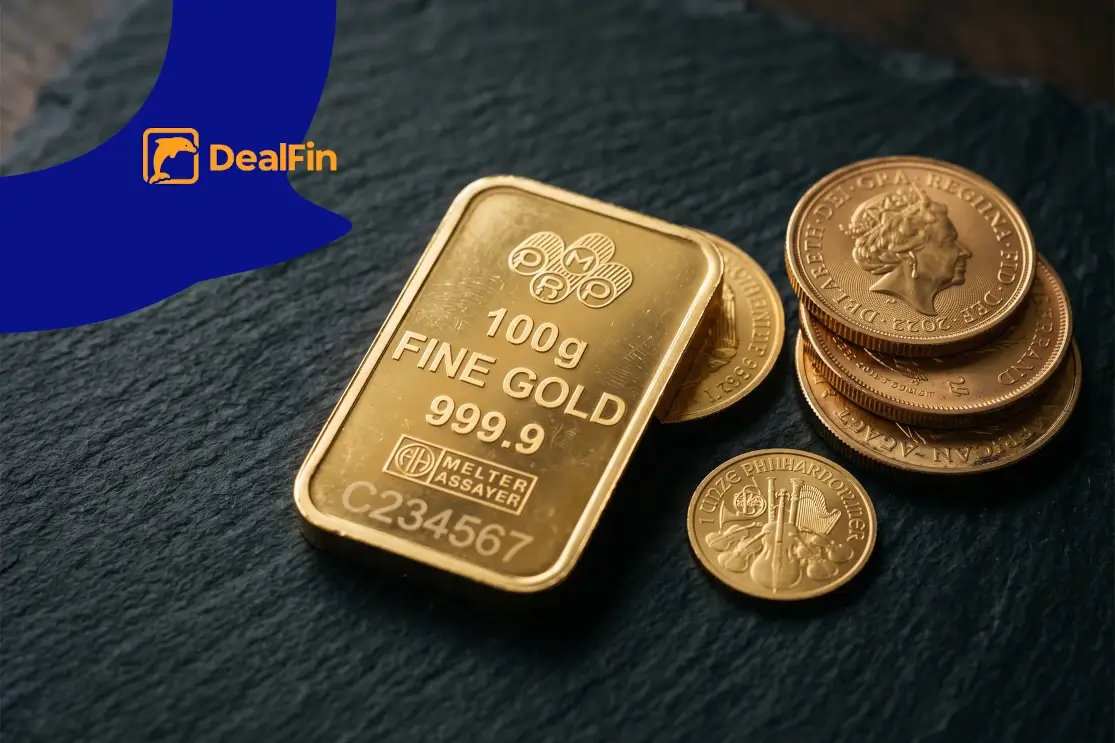
The standard sizes available on the market are clearly defined. Dealers commonly offer investment bars weighing 1 oz. Practical fractional sizes such as 1/2 oz, 1/4 oz, and 1/10 oz are also widely available. A physical troy ounce of gold is by far the most liquid format for both resale and buyback purposes.
Today’s market offers exceptionally popular and globally recognized mintings. Among the most popular one-ounce investment coins is the famous Austrian Wiener Philharmoniker. Other globally dominant coins include the Canadian Maple Leaf, the South African Krugerrand, and the renowned American Eagle. They are highly practical because they can be easily valued almost anywhere in the world.
How to Convert Grams to Troy Ounces and Vice Versa
For every successful purchase or sale, you need to know the correct ounce-to-gram conversion. Fortunately, it is not complicated at all. You only need to remember the basic coefficient of 31.1035.
Using this number, you can quickly and accurately convert any weight with a simple calculator. Here are the practical conversion formulas:
- grams → troy ounces: divide by 31.1035
- troy ounces → grams: multiply by 31.1035
Below are specific conversion examples. These values will help you better estimate the actual weight of an ounce of gold when buying or selling physical bars and coins.
Conversion Examples:
| Grams | Troy Ounces |
|---|---|
| 10 g | 0,3215 oz |
| 50 g | 1,608 oz |
| 100 g | 3,215 oz |
| 1000 g (1 kg) | 32,15 oz |
Frequently Asked Questions, Troy Ounce
One troy ounce weighs exactly 31.1034768 grams. In everyday investment and trading practice, this precise figure is usually rounded to 31.1 grams for simplicity.
In 2026, the global gold price is approximately 4,500 dollars per ounce. In Czech crowns, this currently corresponds to roughly CZK 94,000.
This is due to centuries of uninterrupted tradition. The global precious metals market uses this historical standard, which originated in the French city of Troyes. It ensures complete consistency, transparency, and compatibility worldwide.
Yes, and the difference is quite significant. While an investment troy ounce weighs approximately 31.1 grams, a standard commercial ounce weighs only 28.35 grams. The difference is therefore very noticeable.
If you divide 1,000 grams by the weight of one ounce, you will quickly get the correct result. One kilogram of gold contains approximately 32.15 troy ounces. This is a popular format for large investment bars.
Planning to buy investment gold? Explore our other articles about investment bars and coins, current gold prices, and different ways to purchase gold.