White Gold: What It Is, Hallmarks, Price and Care

White gold is one of the most popular materials for wedding rings, engagement rings, earrings and other jewellery. At first glance, it resembles platinum or silver, but it is not a separate metal or a naturally white form of gold.
It is made by combining gold with metals that lighten its colour while also improving the hardness of the alloy. A layer of rhodium often gives it an even brighter finish. This means design is not the only factor to consider when choosing white gold. Purity, composition, surface quality and the authenticity of the markings are also important. The search term “white gold hallmark” therefore usually refers to fineness such as 585 or 750, just as with yellow gold.
In the following overview, you will learn what these numbers mean, why the 925 marking belongs to silver, how the price per gram is calculated, how white gold differs from platinum and how to care for it properly. This gives you the practical information needed to choose jewellery more safely and confidently.
What Is White Gold?
White gold is an alloy of pure gold with one or more light-coloured metals. Gold itself is naturally yellow and very soft, so metals such as palladium, silver, nickel, zinc or copper are added when making jewellery. These additions change the shade and mechanical properties of the alloy, while the actual amount of gold is determined by its fineness.
Yellow gold keeps its warm tone, while rose gold gets most of its colour from copper. White gold, by contrast, usually has a greyish-white appearance. Jewellers often apply rhodium plating: a thin layer of rhodium creates a bright, cool shine and gives the surface a more uniform appearance. However, this coating gradually wears down with use.
What Is White Gold Made Of?
The base is pure gold combined with a precisely defined proportion of alloying metals. With a fineness of 585, gold makes up 58.5% of the total weight, while 750 fineness contains 75% gold. Palladium creates a lighter alloy that is usually more expensive and generally well tolerated. Nickel is effective at whitening and strengthening the alloy, but it can cause a contact reaction in sensitive people.
European regulations therefore limit the release of nickel from jewellery during prolonged contact with the skin. This does not mean that every item is completely nickel-free. If you have an allergy, ask for the exact composition.
It is also worth knowing that white gold without rhodium plating does not have to be snow white. A slightly grey or yellowish tone is natural. A white gold hallmark and fineness marking refer to the gold content, not to the colour of the metal.
White Gold Hallmarks
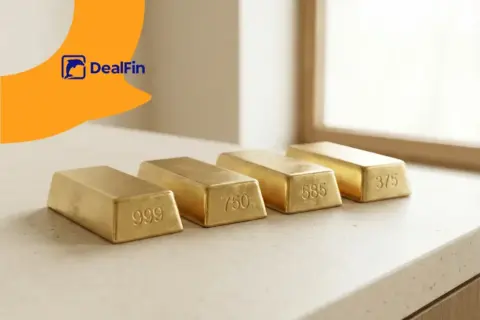
The fineness number shows how many parts of gold are present in one thousand parts of the alloy. The Czech Assay Office publishes an overview of the current Czech hallmarks. In addition to a numerical fineness mark, jewellery may also carry an official assay hallmark and a responsibility or manufacturer’s mark.
| Fineness | Carats | Gold content | Typical use |
|---|---|---|---|
| 999 | 24 | 99.9% | Pure gold, investment bars |
| 750 | 18 | 75.0% | Luxury jewellery |
| 585 | 14 | 58.5% | Common jewellery, most popular in the Czech Republic |
| 375 | 9 | 37.5% | More affordable jewellery |
In the Czech Republic, 14-carat gold with a fineness of 585 is the most common choice for jewellery, while 18-carat gold is marked 750. However, the stamped number should always be considered together with the shape of the hallmark and the origin of the item.
Many people also search for “white gold 925”, but this is a common mistake. The 925 marking means 92.5% silver, not white gold.
A gold item marked 925 therefore requires verification. White gold normally carries a fineness mark such as 585 or 750, or another legally recognised gold fineness.
How Much Does White Gold Cost?
There is no single universal price. With gold trading at approximately USD 4,077 per troy ounce and the Czech National Bank exchange rate at CZK 21.171 per US dollar on 21 July 2026, the approximate value of pure gold was about CZK 2,775 per gram.
The gold content in one gram of 585 alloy was worth approximately CZK 1,620, while the gold content in 750 alloy was worth around CZK 2,080. These figures represent only the value of the gold contained in the alloy, not the retail price of the finished jewellery.
The final price is increased by alloying metals, labour, manufacturing losses, gemstones, brand value, retailer margin and possible rhodium plating. A palladium-based white gold alloy may cost more than yellow gold of the same fineness, but this is not always the case.
When choosing a white gold ring, consider not only its weight but also its fineness, quality of workmanship, gemstone setting and total price.
White Gold vs Platinum: What Is the Difference?
White gold is an alloy that typically contains 58.5% or 75% gold and often has a rhodium-plated surface. Platinum is a naturally white-grey metal. In jewellery, it is commonly used at a high fineness of 950 and usually does not require rhodium plating. It is significantly denser, so a ring of the same size will generally feel heavier.
The surface of both metals can become scratched, but platinum does not reveal a different colour beneath a coating. Platinum is often hypoallergenic, and a comparable piece of jewellery may cost more because of its greater weight and more demanding processing, even though the market price of platinum itself does not necessarily exceed the price of gold. When choosing a white gold ring, it is therefore worth considering both rhodium maintenance and skin sensitivity.
White Gold vs Silver: How Can You Tell the Difference?
You cannot reliably distinguish a white gold ring from a silver one by colour alone. Freshly rhodium-plated white gold and rhodium-plated silver can have an almost identical shine. Hallmarks and fineness markings are more reliable. For gold, look for 585 or 750 and the corresponding hallmark. Silver is most commonly marked 925.
Gold is usually heavier at the same size, and its material value is many times higher. However, the exact weight depends on the specific alloy and construction of the item. A home magnet test cannot confirm authenticity, and chemical testing may damage the jewellery.
If the item is unclear, older or particularly valuable, ask a jeweller or the Czech Assay Office for professional verification.
White Gold in Jewellery
White gold rings include both delicate and more striking designs, and the light-coloured metal allows colourless stones to stand out. Wedding and engagement rings made from white gold therefore often feature a brilliant, meaning a diamond cut in the round brilliant style.
Popular white gold jewellery includes:
- Women’s white gold rings: from delicate designs to more prominent rings set with gemstones.
- Men’s white gold rings: usually wider and simpler styles designed for everyday wear.
- Earrings and pendants: an elegant choice that is easy to combine with other jewellery.
- Chains and bracelets: modern white gold pieces suitable for a wide range of occasions.
When choosing a white gold ring, pay particular attention to fineness, dimensions, quality of workmanship and comfort during wear. With jewellery that is worn frequently, remember that the rhodium layer may gradually wear away over time.
How to Care for White Gold
Clean white gold in lukewarm water with a drop of mild dishwashing liquid, using a soft cloth or a very gentle brush. Afterwards, rinse and dry the jewellery and store it separately so that it does not become scratched by harder gemstones or other metals.
Avoid toothpaste, abrasive cleaners, chlorine and harsh chemicals. It is better to remove a ring before swimming, cleaning or carrying out demanding manual work.
Rhodium plating is renewed depending on its condition, often approximately every 2 to 5 years, and sometimes sooner for a ring worn every day. At the same time, a jeweller can check the gemstone settings and professionally polish the piece.
Frequently Asked Questions About White Gold
White gold is an alloy of gold with metals such as palladium, silver or nickel. Its bright white surface is often created by rhodium plating.
The most common fineness levels are 585 for 14-carat gold and 750 for 18-carat gold. The colour of the metal does not change its fineness or hallmark.
It depends on the fineness and the current gold price. In July 2026, the value of the gold content alone was approximately CZK 1,620 for 585 fineness and CZK 2,080 for 750 fineness. A finished piece of jewellery costs more.
At the same fineness, both contain the same proportion of gold. The difference in price comes from the alloy composition, rhodium plating, labour, design, gemstones and the retailer’s margin.
White gold is a gold alloy that is often rhodium-plated. Platinum is a naturally white-grey, denser metal used at high fineness and usually does not require renewed plating.
No. The 925 marking belongs to silver with a fineness of 92.5%. The phrase “white gold 925” therefore describes a common misunderstanding, not a standard gold fineness.
Interested in gold as an investment rather than only as jewellery? Explore our articles about investment gold, its prices and the different ways to buy gold bars and coins.