
Gold Price Chart – 100 Years of Price Development
Gold has proven that it can maintain its value over centuries and even increase it over time. The development of gold prices over the past 100 years is no exception and clearly demonstrates how attractive this precious metal is as an investment for both individual investors and large institutions. On this page, you will find a 100-year gold price chart along with the key events associated with it.
For investors, it is very important to understand these events and developments, as history often repeats itself, and it is not unlikely that gold will react to certain types of events in a similar way as it did in the past. In fact, we can observe this even today.
Gold Price Chart – 100 Years in One Place
Gold price by weight
Gold price by year
Gold rate for the period
GOLDEN BULLS FOR PROFITABLE INVESTMENTS TODAY IN VIEW OF RISING PRICES
-
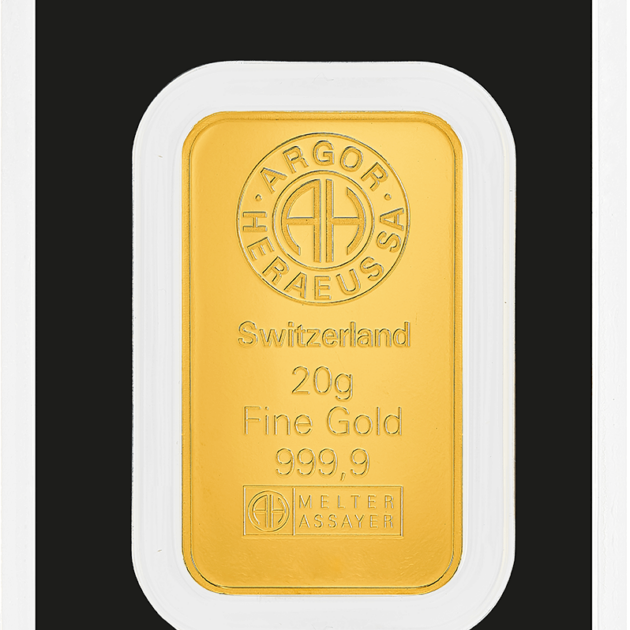
- Fine gold999.9
- Weight20 grams
- ProducerArgor-Heraeus
-
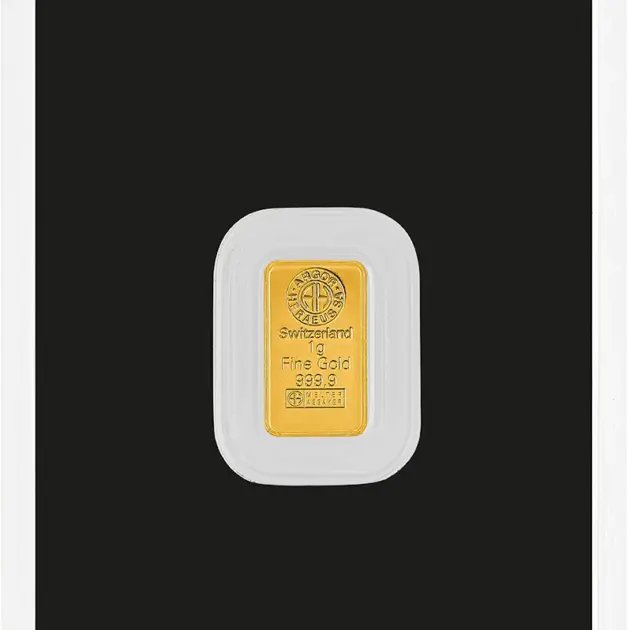
- Fine gold999.9
- Weight1 gram
- ProducerArgor-Heraeus
-
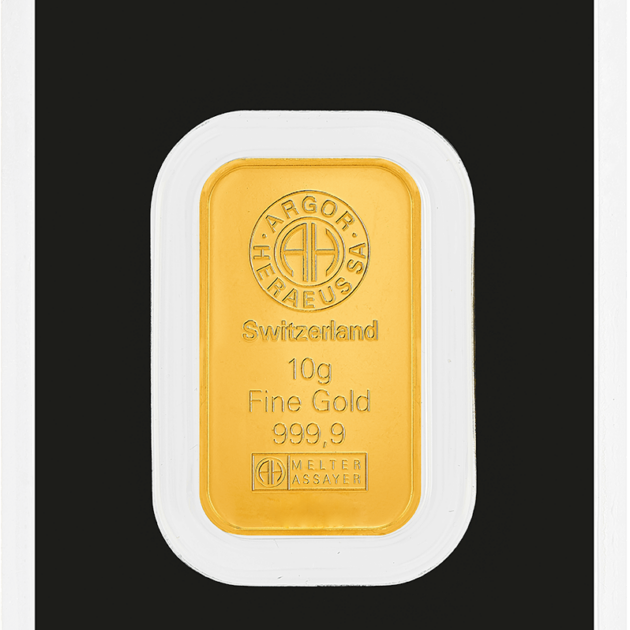
- Fine gold999.9
- Weight10 grams
- ProducerArgor-Heraeus
-
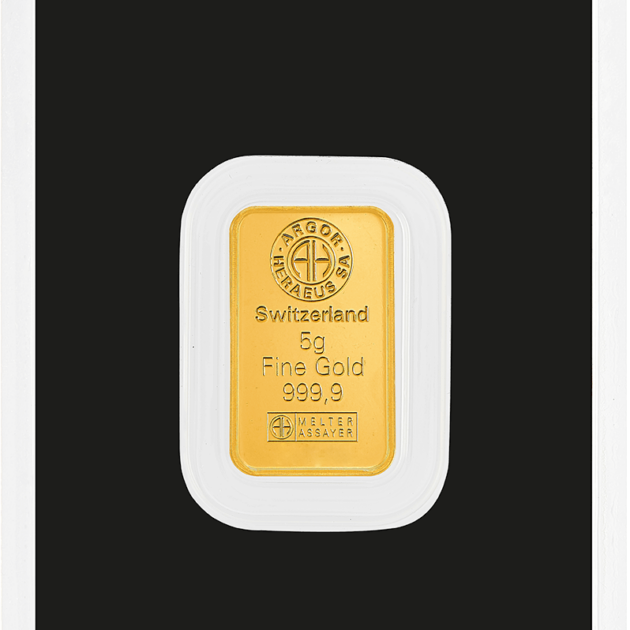
- Fine gold999.9
- Weight5 grams
- ProducerArgor-Heraeus
-
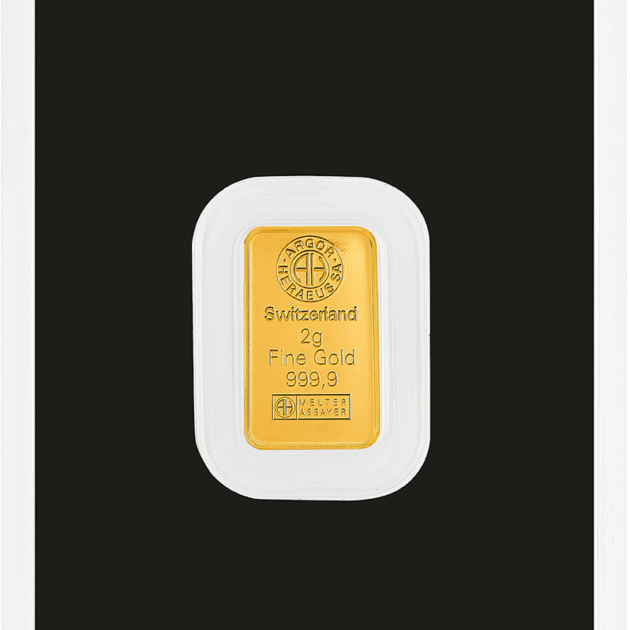
- Fine gold999.9
- Weight2 grams
- ProducerArgor-Heraeus
The 100-year gold price chart shows that gold primarily serves as a reliable store of value. In recent years, it has been one of the most profitable assets overall, which has certainly pleased its investors.
However, the historical development is quite complex due to the countless events that have influenced gold prices over the past 100 years. Let us briefly introduce the most important ones, while you can simultaneously observe on the chart how gold reacted to them during specific periods — the price can be displayed in Czech koruna or in US dollars.
1933: Ban on private ownership and price fixed in the USA at 35 dollars.
1944: The Bretton Woods system linked the dollar to gold and other currencies to the dollar.
1971: The end of dollar convertibility into gold triggered a sharp price increase.
1980: The oil crisis and massive inflation pushed gold to 850 dollars.
1999: Investor disinterest and central bank sell-offs pushed the price to a bottom.
2008: Global financial panic restored gold’s role as a safe haven.
2020: The pandemic and massive money printing enabled gold to surpass 2,000 dollars.
2024: Wars and high inflation continue to keep the price at historical highs, reaching 5,500 dollars.
Key Events on the Gold Chart – 100-Year History
The 100-year gold chart is a fascinating record of our history. It reflects investor fears during crises, geopolitical conflicts, periods of high inflation, and major changes in the financial system. Let us now go through the most important price milestones in more detail.
1933–1934: Gold confiscation and price fixing
During the Great Depression, the United States faced a massive outflow of gold reserves, and President Franklin D. Roosevelt imposed a radical ban on private gold ownership. The government subsequently devalued the dollar and fixed the price at 35 dollars per ounce.
1944: The new Bretton Woods system
The end of World War II created the need for a new monetary system. The dollar officially became the main global reserve currency, fixed to gold at a set rate. Other global currencies were pegged to the US dollar.
1971: Nixon shock and free market era
Rising US inflation and massive spending on the Vietnam War depleted gold reserves. President Richard Nixon therefore ended the convertibility of the dollar into physical gold. This marked the beginning of floating exchange rates and a sharp increase in gold prices.
1980: Oil crisis and inflation peak
At the turn of the 1970s and 1980s, the world was hit by a combination of oil shocks, high unemployment, and double-digit inflation. Investors sought a safe haven in panic — and found it in gold, which quickly reached around 850 dollars per troy ounce (approximately 31.1 grams).
1999–2001: Era of disinterest and price bottom
The 1990s were unfavorable for precious metals, as stock markets boomed due to technology companies. Central banks also sold large amounts of gold reserves. The price fell to around 250 dollars per ounce, representing a long-term and relatively extreme bottom.
2008–2011: Global financial crisis
The collapse of investment bank Lehman Brothers triggered global panic in financial markets. Subsequent aggressive quantitative easing and fears of a eurozone collapse drove investors back to physical gold. By 2011, the price exceeded 1,900 dollars.
2020: Pandemic and money printing
The outbreak of the global pandemic caused an unprecedented shutdown of the world economy. Central banks responded with drastic rate cuts and massive money printing. This extreme uncertainty pushed gold prices above 2,000 dollars per ounce.
2022–2026: Wars and return of inflation
The war in Ukraine, tensions in the Middle East, and disrupted supply chains caused a sharp rise in inflation. Gold fully confirmed its role as a protector of wealth, attracting investors during uncertain times and unfavorable conditions in traditional financial markets. The price consistently broke previous records and stabilized above 4,000 dollars, reaching a peak of around 5,500 dollars per ounce.
Main Price Catalysts
What has influenced gold prices the most over the past 100 years? The key factors include long-term inflation, geopolitical conflicts, loose monetary policy, unexpected economic crises, and general panic in traditional markets. Thanks to these factors, gold remains a timeless measure of financial stability despite occasional fluctuations.
Trend Analysis and Conclusions for Investors
Gold primarily functions as a long-term store of wealth. The exact century-long return in Czech koruna is distorted by historical currency reforms, but the global average return has historically been around 7–8% per year. This growth reliably compensates for inflation.
A comparison with other major asset classes provides the following long-term trends:
Stocks offer the highest real returns but also carry higher risk. The average annual return of the S&P 500 index is around 9–10%.
Gold stabilizes the overall portfolio and tends to increase in value during unfavorable periods.
Bonds significantly reduce volatility, but their returns are typically around 4–5% per year.
Cash continuously loses purchasing power due to inflation.
The conclusion for investors is clear. Gold is not primarily intended for rapid wealth accumulation, but rather as a reliable hedge against extreme conditions.
It is also crucial to monitor currency developments over time. Gold is traded globally in US dollars, but locally it can be purchased in Czech koruna. If the koruna weakens against the dollar, the value of gold in CZK rises faster. Conversely, a strong koruna can reduce dollar-based gains.
An experienced investor typically does not view physical gold as a speculative instrument. Instead, it is considered an asset that enhances portfolio diversification and tends to rise when traditional financial markets struggle.
Frequently Asked Questions – Gold Price Chart 100 Years
